The Real Kona: What Makes Hawaii's Volcanic Coffee Worth the Splurge
The Real Kona: What Makes Hawaii's Volcanic Coffee Worth the Splurge
Let's be honest — when you first see the price tag on a bag of 100% Kona coffee, your instinct might be to put it back on the shelf. Anywhere from $40 to $60 per pound for a single-origin bean? That's a lot to ask of a morning ritual. But here at Island Joe's, we've always believed that great coffee tells a story, and Kona's story is one of the most compelling in the entire world of specialty coffee. Once you hear it, you'll understand exactly why this Hawaiian treasure commands the price it does.
Born from Lava: The Geography That Changes Everything
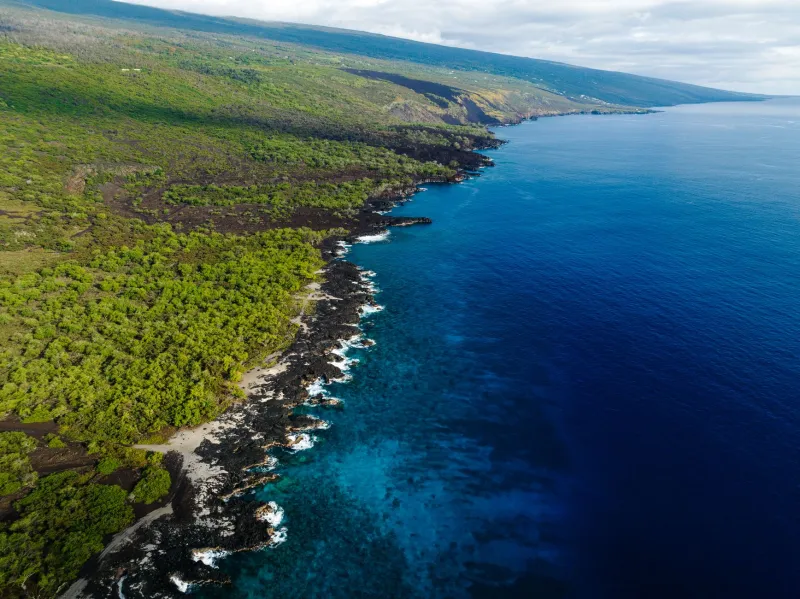
Kona coffee grows in one of the most geographically specific regions on the planet — a narrow belt along the western slopes of Mauna Loa and Hualalai volcanoes on Hawaii's Big Island. We're talking about a strip of land roughly 30 miles long and just a couple of miles wide. That's it. The entire global supply of authentic Kona coffee comes from this sliver of volcanic terrain.
And that terrain? It's extraordinary. Centuries of volcanic activity have deposited layers of porous, mineral-dense lava rock that drains exceptionally well — no waterlogged roots here. The soil is naturally rich in potassium, phosphorus, and trace minerals that feed the coffee trees in ways that manufactured fertilizers simply can't replicate. Morning cloud cover rolls in from the ocean like clockwork, shading the trees from the harshest afternoon sun while locking in just the right amount of moisture. Temperatures stay mild year-round, rarely dipping below 55°F or climbing above 85°F. For a coffee plant, this is paradise.
This microclimate isn't something farmers engineered — it's a gift from the island itself. And because it can't be recreated anywhere else on Earth, Kona coffee carries an inherent scarcity that simply doesn't exist for beans grown across vast commercial plantations in Brazil or Vietnam.
Small Farms, Big Heart
Kona isn't a place where industrial farming machines roll through endless rows of coffee trees. The region is dominated by small, family-run farms — many of them just a few acres in size — where harvesting is done almost entirely by hand. Pickers walk the rows multiple times per season, selecting only the ripest cherries at peak flavor. This selective picking process, known as hand-sorting, is labor-intensive and time-consuming, but it's also what separates a transcendent cup of coffee from a merely decent one.
Many of these farm families have been tending their land for two, three, or even four generations. They know their trees the way a winemaker knows their vines. That kind of generational knowledge — when to pick, how to process, how to dry — isn't something you learn in a classroom. It's passed down over decades, refined through seasons of trial, patience, and genuine love for the craft.
When you buy a bag of authentic 100% Kona, you're not just purchasing coffee. You're supporting a living agricultural tradition that keeps small Hawaiian farmers economically viable in an era when Big Ag dominates nearly every corner of the food industry.
The 'Kona Blend' Problem: Don't Get Fooled
Here's where things get a little tricky — and where a lot of well-meaning coffee lovers end up disappointed. Walk down the coffee aisle at your local grocery store and you'll likely spot bags labeled 'Kona Blend' selling for $12 or $15. Sounds like a deal, right? Here's the uncomfortable truth: under Hawaii state law, a coffee can legally be labeled a 'Kona Blend' if it contains as little as 10% actual Kona coffee. The remaining 90%? Usually lower-grade beans from other origins.
That means you might be paying a slight premium for the Kona name while getting almost none of the Kona experience. It's one of the most misleading practices in the specialty coffee world, and it's something we at Island Joe's feel strongly about calling out.
The only way to guarantee you're getting the real deal is to look for bags explicitly labeled '100% Kona Coffee.' That designation means every bean in the bag came from the Kona district — no filler, no shortcuts.
How to Buy the Real Thing: A Practical Guide
So how do you make sure you're spending your money wisely? A few key things to look for:
Check the label carefully. '100% Kona' is the magic phrase. 'Kona Blend,' 'Kona Style,' or 'Kona Roast' are all red flags that you're getting a diluted product.
Look for farm or estate identification. Many reputable Kona producers will name the specific farm or estate on the packaging. This kind of transparency is a strong signal of authenticity and quality.
Verify the grade. Hawaii has an official grading system for Kona coffee. 'Kona Extra Fancy' is the highest grade, featuring the largest, most uniform beans. Below that you'll find 'Fancy,' 'Number 1,' and 'Select.' All are genuine Kona — the grade just reflects bean size and consistency, not necessarily flavor superiority.
Buy directly when possible. Purchasing from Hawaiian farms directly, or from specialty roasters with verified sourcing relationships, cuts out the middlemen who sometimes obscure origin information. At Island Joe's, we're proud to be transparent about where our beans come from and how they were grown.
Expect to pay for quality. If a bag of 'Kona' costs less than $30 per pound, be skeptical. Authentic Kona has real production costs baked into every ounce — fair wages for hand pickers, small-batch processing, and the premium that comes with limited supply.
What Does It Actually Taste Like?
All of this context is great, but ultimately coffee is about what's in the cup. Authentic Kona tends to deliver a flavor profile that's smooth, medium-bodied, and remarkably clean — free of the bitterness or harshness that can plague lower-quality beans. You'll often notice bright, wine-like acidity on the front end, followed by rich, chocolatey undertones and a lingering, slightly nutty finish. Some lots carry hints of tropical fruit or caramel that feel almost tailor-made for the island setting where they were born.
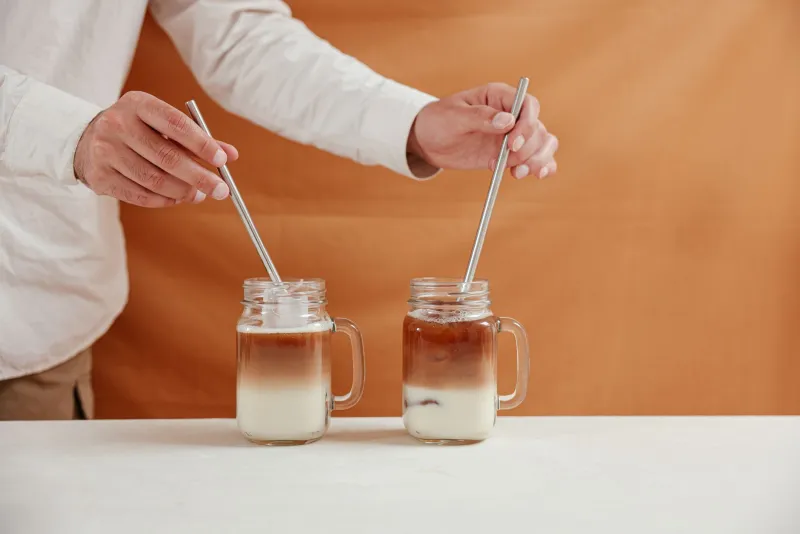
It's a cup that rewards slow sipping. Pour it black if you want the full experience — Kona is confident enough to stand on its own without cream or sugar.
The Bottom Line
Kona coffee is expensive because it's genuinely exceptional — not because of marketing hype or a fancy name. The volcanic soil, the hand-harvested cherries, the generational farming expertise, the strictly limited growing region — every element of what makes Kona special also makes it costly to produce. When you buy authentic 100% Kona, you're investing in something that can't be faked or mass-produced.
At Island Joe's, we believe the bold coffee lover deserves to know exactly what they're paying for. And in the case of Kona? Every single penny is earned.