Mountain, Rain, and Lava: A Beginner's Guide to Tasting Where Your Coffee Grew
There's a word that wine people throw around constantly: terroir. It's a French term, and it basically means that the land a crop grows on — the soil, the climate, the elevation, the surrounding ecosystem — leaves a detectable imprint on what you eventually taste in your glass.
Coffee has terroir too. It just doesn't get talked about nearly enough.
At Island Joe's, we think about this a lot. Every bag we roast carries the fingerprint of a specific place — a hillside, a microclimate, a particular stretch of volcanic soil that's been building for thousands of years. And once you know how to read those fingerprints, your morning cup becomes a completely different experience.
Here's your field guide to understanding — and actually tasting — coffee terroir.
Why Geography Shows Up in Your Cup
Coffee is an agricultural product before it's a beverage. The cherry that eventually becomes your bean spent months developing on a tree that was shaped by everything around it: how much rain fell, how cool the nights got, what minerals were available in the soil, how much shade the canopy provided.
All of those conditions influence the chemistry of the bean — its sugar content, its acidity, its density, the compounds that create aroma. By the time the coffee is roasted and brewed, those environmental factors have been locked into the flavor profile. A skilled roaster's job is partly to honor that profile rather than override it.
In Pacific island growing regions, a few key geographic forces are especially influential.
Elevation: The Slow-Grown Advantage
Coffee grown at higher elevations develops more slowly. Cooler temperatures mean the cherry takes longer to ripen, and that extended development allows more complex sugars and acids to form inside the bean.
The result in the cup? More brightness, more nuance, a flavor that keeps shifting as you drink it rather than hitting you with one flat note and calling it a day.
Hawaiian coffee grown at 1,500 to 2,500 feet above sea level — common in regions like Kona, Ka'u, and Maui's upcountry — tends to show this complexity clearly. You'll often notice a clean, almost tea-like quality alongside the expected coffee richness. That's elevation doing its work.
How to taste it: Brew your coffee and let it cool for two or three minutes before your first sip. High-elevation coffees often reveal more as they drop in temperature. Notice whether the flavor stays one-dimensional or opens up.
Volcanic Soil: The Mineral Foundation
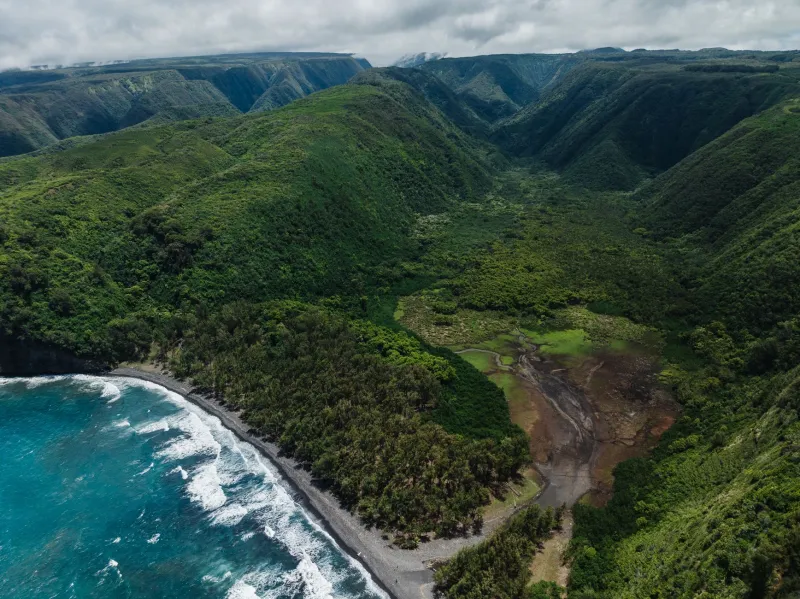
Hawaii's geology is unlike almost anywhere else on earth. The islands literally rose from the ocean floor through volcanic activity, and that origin creates soil with a mineral composition that's dense, porous, and exceptionally well-draining.
Volcanic soil tends to be rich in potassium, phosphorus, and magnesium — all of which contribute to healthy coffee cherry development and influence how the bean's acids balance out. The porousness also means water drains quickly, which prevents root rot and forces the plant to develop a deeper, more resilient root system.
What you taste from this: a certain roundness, a natural sweetness, and an acidity that feels bright rather than sharp. It's the difference between biting into a ripe peach and sucking on a lemon.
How to taste it: Pay attention to the finish — the flavor that lingers after you swallow. Volcanic-soil coffees often have a long, clean finish with a faint mineral quality. If your coffee ends abruptly or turns bitter at the back, that's a sign the terroir (or the roast) isn't working in your favor.
Trade Winds and Cloud Cover: Nature's Temperature Control
The Hawaiian Islands sit in the path of the Pacific trade winds, which blow consistently from the northeast. On the slopes where most coffee grows, these winds interact with the terrain to create something remarkable: afternoon cloud cover that acts like a natural sun umbrella.
This pattern — sunny mornings, cloudy afternoons — gives coffee trees intense light during their peak photosynthesis hours while protecting them from heat stress later in the day. It's essentially a built-in climate management system that produces beans with exceptional consistency.
The effect in the cup tends to be a smoother, more even flavor profile. The beans don't carry the stress of extreme heat swings, and that evenness translates to a roast that's easier to dial in and a brew that's forgiving across different methods.
How to taste it: Compare the same Island Joe's coffee brewed two ways — a pour-over and a French press. If the coffee holds up well across both methods with minimal bitterness in either, that consistency is partly a gift from the geography.
Building Your Own Tasting Framework
You don't need to be a certified Q Grader to develop real palate awareness. You just need a repeatable process. Here's a simple one to try with your next bag:
Step 1 — Smell before you brew. Open the bag and breathe in. Fruity? Earthy? Nutty? Floral? That first impression often reflects the terroir more directly than the brewed cup does.
Step 2 — Taste it black, at least once. Cream and sugar are fine, but they mask the geographic fingerprint. Give yourself one sip without anything added.
Step 3 — Note the acidity. Is it bright and clean, like citrus? Or is it low and mellow? Higher-elevation, well-drained volcanic soils tend toward the brighter end.
Step 4 — Check the finish. How long does the flavor last? Does it leave a pleasant aftertaste or disappear immediately? Complexity in the finish is often a sign of good terroir and careful processing.
Step 5 — Write it down. Even one sentence. Over time, your notes will start to reveal patterns — and you'll begin to recognize the mountain in the cup before you even look at the bag.
The Land Is in There — Go Find It
Every bag of Island Joe's coffee is a dispatch from a specific place. The elevation, the rain, the volcanic rock beneath the roots — it all made the journey from the farm to your kitchen. The only thing left is for you to slow down long enough to taste it.
That's not pretension. That's just paying attention to something genuinely worth your attention.