Roots in the Soil: How Hawaiian Farmers Are Bringing Old-World Wisdom Back to Your Coffee Cup
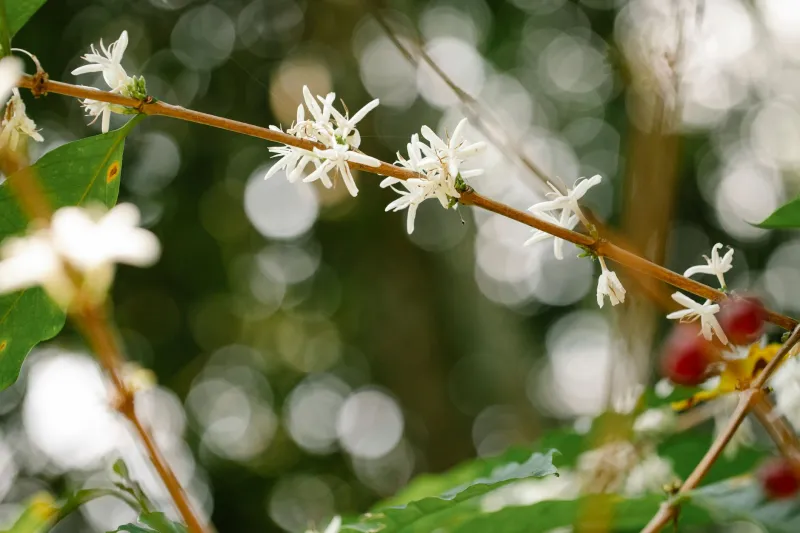
There's a phrase you hear a lot around Hawaii's coffee farms lately: mālama ʻāina — to care for the land. It's not a new idea. Polynesian settlers were practicing it long before the first coffee seedling ever found its way to Hawaiian soil. But something meaningful is happening right now across the Big Island, Maui, and Kauaʻi: a growing number of farmers are deliberately reaching back into that ancestral playbook, and the results are showing up in your cup in ways that are genuinely hard to ignore.
This isn't nostalgia for nostalgia's sake. It's a practical, flavor-forward movement rooted in science as much as culture — and for coffee drinkers who care about what they're actually tasting, it's one of the most exciting shifts in specialty coffee in years.
What "Ancient Techniques" Actually Means on a Modern Farm
When people hear "traditional Polynesian agriculture," they sometimes picture something purely ceremonial or symbolic. The reality is far more pragmatic. Pre-contact Hawaiian farming systems, particularly the ahupuaʻa land division model, were engineered for long-term ecological balance. Resources flowed from mountain to sea in carefully managed corridors. Nothing was wasted. Everything was connected.
Two specific practices from that tradition are making a major comeback on working coffee farms today:
Agroforestry involves growing coffee under a diverse canopy of native and introduced trees — think macadamia, breadfruit, kukui, and even native ʻōhiʻa. Rather than cultivating coffee in open, sun-exposed rows (a method that boosts short-term yield but stresses the plant), agroforestry mimics the natural shade conditions coffee actually evolved under. The result? Slower cherry development, higher sugar concentration, and a cup with noticeably more depth.
Companion planting pairs coffee with specific neighboring plants that serve a purpose — nitrogen-fixing groundcovers that feed the soil naturally, flowering plants that attract pollinators, or aromatic herbs that may discourage pests without chemical intervention. It's a living, breathing ecosystem rather than a monoculture.
The Farms Leading the Way
A handful of operations are doing particularly interesting work in this space.
On the Big Island's South Kona coast, small family farms have begun reintroducing native shade trees that were cleared decades ago in favor of higher-density planting. The shift has slowed production timelines — but farmers report that cup quality scores from specialty buyers have climbed noticeably, with tasters picking up stone fruit and floral notes that weren't present before.
Up on Maui's slopes, some growers are experimenting with intercropping coffee alongside taro, a staple crop with deep cultural significance in Hawaiian tradition. Early results suggest the taro's broad leaves help regulate soil moisture in ways that benefit the coffee during dry spells — a natural buffer that reduces the need for irrigation.
On Kauaʻi, where rainfall is less predictable, farmers are using traditional water management principles to direct natural runoff through coffee plots in ways that reduce erosion and keep root systems consistently hydrated. It's essentially a modern adaptation of the ancient loʻi (flooded field) concept, applied to dryland crops.
None of these farms are doing it exactly the same way. That variation is actually part of the point.
How It Changes What You Taste
Here's where things get interesting for the coffee drinker sitting at home with a bag of Hawaiian single-origin.
Conventional, sun-grown coffee cherries mature faster. Fast maturation means less time for sugars and acids to develop in the fruit. Less complexity in the fruit means less complexity in the roasted bean — and ultimately, a flatter cup.
Shade-grown, agroforestry-raised coffee works on a different clock. The cherries ripen more slowly and more evenly. The plant isn't stressed by direct sun exposure, so it directs more energy into the fruit itself. Farmers and roasters consistently describe the flavor difference as moving from "one-dimensional" to "layered" — the kind of cup where you notice something different on the finish than you did on the first sip.
Companion planting adds another dimension. Healthy, biologically active soil produces a more nutritionally complete coffee plant. That richness in the growing environment has a measurable impact on bean density and oil content — two factors that directly influence how a roast develops and how a brewed cup tastes.
In short: the old ways aren't just culturally meaningful. They're agronomically sound.
The Cultural Preservation Angle You Might Not Have Considered
Buying a bag of coffee from a farm practicing these methods is doing something beyond supporting good taste. It's helping keep a set of land-stewardship practices alive that were nearly lost entirely.
Hawaiian agricultural knowledge took serious hits through colonization, land redistribution, and the industrialization of farming in the 20th century. The farmers reintroducing agroforestry and companion planting aren't just growing coffee — they're collaborating with cultural practitioners, ethnobotanists, and community elders to reconstruct methods that were passed down orally and are only partially documented.
When a farm invests in native shade trees that take years to mature, they're making a bet on the future that goes well beyond the next harvest season. Your purchase — especially when you buy direct from Hawaiian roasters who source from these farms — is part of what makes that bet financially viable.
What to Look for When You Buy
Not every bag labeled "Hawaiian coffee" reflects these practices, so it's worth knowing what to look for:
- Single-origin transparency: Does the brand tell you which farm or region the coffee comes from? Vague regional claims are a flag.
- Shade-grown or agroforestry notation: Some farms are beginning to label this explicitly. If it's not on the bag, it's worth asking the roaster directly.
- Small-batch roasting: Farms practicing these methods typically produce in smaller quantities. If a brand is selling Hawaiian coffee at massive scale for bargain prices, the sourcing story probably doesn't hold up.
- Direct trade relationships: Roasters who visit farms and know their growers by name are far more likely to be sourcing from operations that are actually doing the work.
The Bigger Picture
Hawaiian specialty coffee has always had a geography story — volcanic soil, elevation, Pacific trade winds. That story is real and it matters. But what's emerging now is something richer: a cultural story layered on top of the geographic one.
The farmers reviving these techniques are saying something with their choices. They're saying that the land has memory, that the knowledge their ancestors developed over generations wasn't just practical — it was sophisticated. And they're proving, one harvest at a time, that the cup you brew in the morning can be a small but genuine act of connection to something much larger than a caffeine fix.
At Island Joe's, we think that's worth knowing about. And honestly? It makes the coffee taste even better.