Steep Your Way to Better Coffee: The Ancient Hawaiian Immersion Method That's Making a Serious Comeback
Steep Your Way to Better Coffee: The Ancient Hawaiian Immersion Method That's Making a Serious Comeback
There's a quiet rebellion happening in kitchens across America. Coffee drinkers who once swore by their automatic drip machines — or even their carefully calibrated pour-over setups — are shelving the gear and reaching for something older, simpler, and honestly, a lot more satisfying. They're steeping their coffee whole. They're letting it sit. They're drinking better because of it.
Immersion brewing isn't new. In fact, it's the way coffee was consumed for centuries across the Pacific Islands, where the relationship between a farmer and their cup was never meant to be rushed. Hawaiian coffee culture, in particular, has long understood something that the rest of the country is only now catching up to: full contact between water and grounds isn't a shortcut — it's a philosophy.
The Problem With Fast Coffee
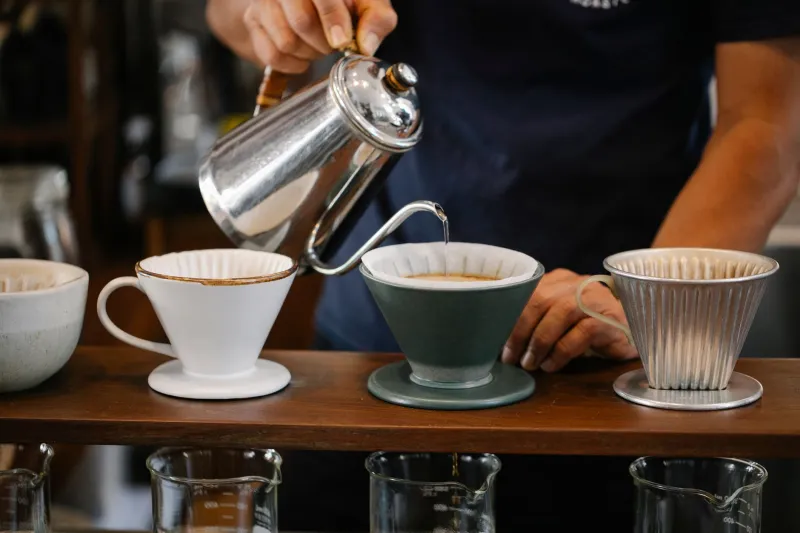
Let's be honest about what drip convenience culture actually costs you. When water passes through a bed of grounds — whether in a flat-bottomed drip basket or a pour-over cone — it's working on a clock. The contact time is short, typically measured in minutes or even seconds per pass, and the extraction is uneven by nature. Water hits the grounds at the top first, rushes through channels it carves for itself, and exits before it's had the chance to coax out everything worth tasting.
Filters compound the problem. Paper filters, especially, strip out the oils naturally present in coffee — the same oils that carry a significant portion of the aromatic compounds and mouthfeel that make a truly great cup feel alive. You're left with something clean, sure. Bright, even. But often thin. Often incomplete.
Hawaiian specialty roasters — the folks working with Kona, Ka'u, Maui Mokka, and other island-grown varietals — have been pushing back on this for years. When your coffee starts as a handpicked cherry on volcanic soil fed by Pacific rains, you don't want to lose half of what makes it special in the extraction process.
What Immersion Actually Does to Your Coffee
Immersion brewing is exactly what it sounds like: your grounds are fully submerged in water for an extended period, steeping the way tea does, before you separate the liquid from the solids. The difference in outcome is dramatic.
Because every ground particle has equal access to water throughout the steep, extraction is far more uniform. You're not fighting channeling or uneven saturation. The water temperature stays more consistent across the entire brew. And critically, the contact time is long enough for the water to pull a wider spectrum of soluble compounds from the coffee — including heavier, more complex molecules that a fast-moving pour-over never gets around to extracting.
Those heavier compounds include certain sugars, longer-chain acids, and aromatic oils that contribute body, sweetness, and what coffee folks call "roundness." When you taste a well-executed immersion brew made with a quality Hawaiian single-origin, you'll notice it — a fullness in the mouth, a lingering finish, a sweetness that doesn't require sugar. It's not muddy or heavy-handed. It's complete.
The science backs this up. Research into coffee extraction consistently shows that immersion methods produce more even extraction yields across a wider range of grind sizes. That's good news for home brewers, because it means immersion is also more forgiving — you don't need a $300 burr grinder to get a great result.
How Hawaiian Coffee Artisans Approach the Steep
On the islands, immersion isn't necessarily a formal technique — it's a mindset. It's the understanding that coffee deserves time. That the farmer who spent months tending those trees deserves to have their work honored in the cup, not rushed through a paper cone in three minutes.
Many Hawaiian coffee artisans favor methods that allow the coffee to rest in water at just-off-boiling temperatures — around 200°F — for anywhere from four to eight minutes before pressing or straining. The ratio they gravitate toward tends to be slightly coarser and slightly more generous than what you'd use for pour-over, because the longer contact time compensates with depth rather than intensity.
What they're after isn't strength — it's complexity. There's a difference. A strong cup hits you hard and fades. A complex cup unfolds, showing you something new as it cools, rewarding patience with nuance.
Replicating This at Home — Without Buying New Equipment
Here's the thing: you almost certainly already own what you need to brew immersion-style coffee at home.
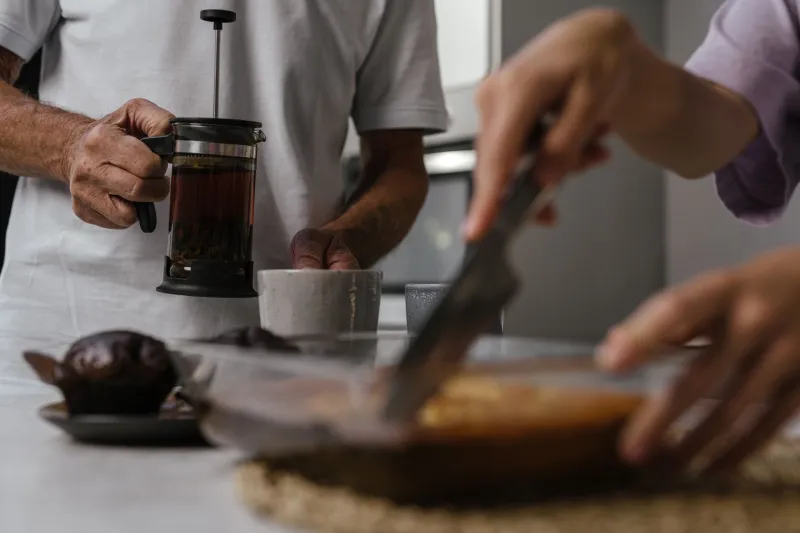
French Press is the most obvious and accessible immersion brewer. If you've got one gathering dust, pull it out. Use a coarse grind — think sea salt texture — at roughly 1:15 coffee to water by weight (about 1 gram of coffee per 15 grams of water). Pour all your water in at once, stir gently to ensure full saturation, and let it steep for four minutes before pressing slowly. Skip the paper insert if your press came with one. You want those oils.
AeroPress in the inverted position is another excellent option. Flip your AeroPress upside down, add your grounds, pour your water, stir, and let it steep for two to three minutes before flipping and pressing. It's fast enough for a weekday morning but immersive enough to produce a noticeably richer cup than standard drip.
Clever Dripper bridges the gap between immersion and filtration. It holds your steep like a French press but releases through a paper filter, giving you a cleaner cup while still capturing the benefits of full-contact brewing. If you prefer a brighter, cleaner style but want more complexity than traditional pour-over delivers, this is your sweet spot.
For any of these methods, start with water heated to about 200°F — just off a boil. And if you haven't already, try them with a Hawaiian single-origin coffee. The island-grown beans, with their natural sweetness and layered fruit notes, are particularly well-suited to immersion brewing. The method lets them speak.
The Bigger Picture
The resurgence of immersion brewing isn't really about technique. It's about a growing rejection of the idea that coffee should be optimized for speed above all else. It's about reconnecting with the cup — with what's actually in it, where it came from, and what it's capable of tasting like when you give it a little room.
Hawaiian coffee culture has always understood this. The islands operate on a different clock, one that makes space for things to develop fully before they're consumed. Your morning cup deserves the same respect.
So the next time you're reaching for that drip machine out of habit, consider letting your coffee steep instead. Let it settle. Let it open up. We think you'll taste the difference — and we're pretty sure you won't go back.