Volcano Soil, Trade Winds, and Sea Air: How Island Geography Ends Up in Your Coffee Glass
Wine drinkers have been talking about terroir for centuries. The idea that soil, climate, and geography leave a traceable flavor signature in the glass is practically gospel in Napa and Bordeaux. But coffee? Coffee drinkers are only now starting to catch up — and when it comes to island-grown beans, the terroir conversation gets genuinely fascinating.
At Island Joe's, we've built our whole identity around coffee that carries a sense of place. Not just marketing copy about paradise, but actual, measurable, tasteable differences that trace directly back to where and how these beans were grown. Let's break down exactly what's going on.
What Terroir Actually Means for Coffee
Terroir (pronounced teh-RWAH, though nobody will judge you for saying it however you want) refers to the complete environmental context in which a crop is grown — soil composition, elevation, rainfall patterns, temperature swings, wind, and even the microbial ecosystem underground. All of these factors influence how a coffee plant develops, how its cherries ripen, and ultimately what chemical compounds end up in the bean.
Those compounds are what you taste. The sugars, acids, oils, and aromatic molecules in your cup are a direct product of the plant's growing environment. Change the environment, and you change the cup.
Island coffee regions — particularly Hawaii's volcanic slopes — offer a combination of growing conditions that are genuinely rare on Earth. Understanding those conditions helps you taste them more clearly.
Volcanic Soil: The Foundation of Everything
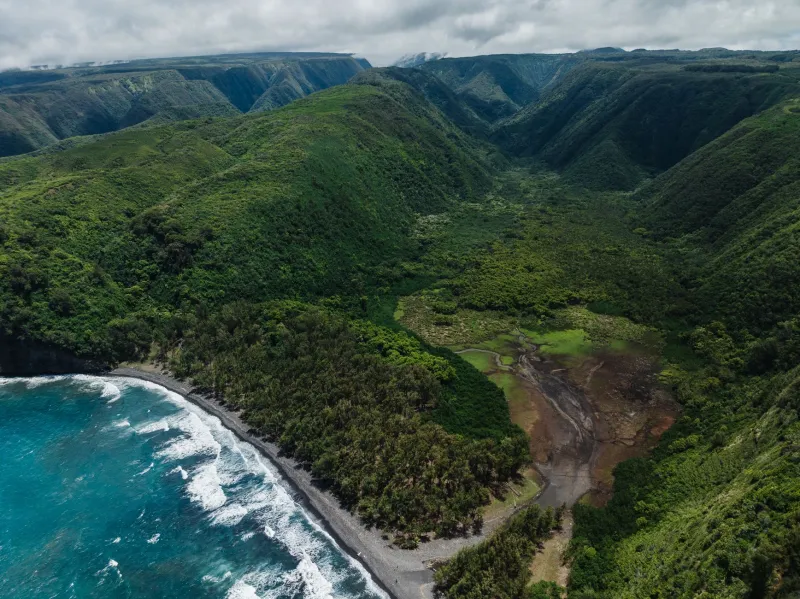
Hawaii sits on some of the most geologically active land on the planet. The Big Island is still growing — literally — as lava from Kilauea continues to reach the ocean. That volcanic activity has, over millennia, produced some of the most mineral-rich soil in the world.
Volcanic soil is high in potassium, phosphorus, and micronutrients that coffee plants use to develop complex flavor compounds. It also tends to drain exceptionally well, which prevents root rot and encourages the plant to dig deeper for water and minerals. The result is a bean with more developed sugars and a fuller body than you'd typically find in flat, clay-heavy soils.
Farmers on the slopes of Mauna Loa and Hualalai often describe their soil as "alive" — and they mean that literally. The microbial activity in volcanic earth is extraordinary, and those microorganisms break down organic matter in ways that feed the plant a constantly evolving nutrient profile throughout the growing season.
In your cup, volcanic soil tends to express itself as body and sweetness — that thick, almost syrupy mouthfeel you notice in a well-pulled Kona, and the natural caramel or dark fruit notes that emerge without any added flavoring.
Trade Winds: Nature's Temperature Control
Hawaii's trade winds blow in from the northeast almost year-round, and for coffee farmers, they're a gift. These steady breezes moderate temperature extremes on the upper slopes, keeping the growing environment cool and consistent even during summer months.
Coffee plants are sensitive to temperature. Stress from heat spikes can rush cherry development, which compresses the time available for sugars to accumulate. The trade winds essentially act as a natural air conditioning system, giving cherries more time on the tree and more opportunity to develop complexity.
Those same winds also carry moisture from the ocean, contributing to the afternoon cloud cover that Kona farmers famously rely on. The pattern — sunny mornings, cloudy afternoons, occasional rain — is almost perfectly calibrated for coffee growing, and it's a pattern the trade winds help create and sustain.
In the cup, this slow, even development tends to produce clean, bright acidity — the kind that reads as fruit rather than sourness. A well-grown Kona or Ka'u coffee often shows notes of stone fruit or tropical citrus that trace directly back to this unhurried ripening process.
Altitude: Where the Magic Gets Concentrated
Elevation is one of the most reliable predictors of coffee quality globally. Higher altitude means cooler temperatures, which slows the maturation of coffee cherries. Slower maturation means more time for the plant to concentrate sugars and develop aromatic compounds in the seed.
Hawaii's coffee-growing elevations — typically between 800 and 2,500 feet on the Big Island — are modest compared to some of the world's highest-grown beans, but the combination of altitude with volcanic soil and trade wind cooling creates a cumulative effect that punches well above its elevation.
On Maui's upcountry slopes and Kauai's higher ridgelines, even slight increases in elevation produce noticeably different cups — more brightness, more floral character, a longer finish. Farmers who grow at multiple elevations will often tell you they can taste the difference in cherry sweetness just by walking uphill.
How to Taste Terroir in Your Cup
Knowing the science is one thing. Actually tasting it is the fun part. Here's a simple tasting framework for identifying terroir markers in island-grown coffee:
Brew it clean. Use a pour-over or a Chemex with filtered water. This method lets the coffee's natural flavors come through without interference from paper-heavy or metallic tastes.
Taste it black, at least the first sip. Milk and sugar mask the subtler notes that terroir produces. Give the coffee one clean sip before you add anything.
Look for body first. A coffee grown in rich volcanic soil will have a noticeable weight in your mouth. Does it feel thin or substantial? That's the soil talking.
Then find the acidity. Is it sharp and quick, or soft and fruity? Trade wind-cooled, slowly ripened cherries tend to produce rounder, fruit-forward acids rather than bright, punchy ones.
Finally, the finish. How long does the flavor linger? High-altitude, mineral-rich soils tend to produce longer finishes — a sign that the bean is carrying more complex compounds.
Why Continental Roasters Can't Replicate This
This isn't about snobbery. It's about geography. The specific convergence of volcanic geology, Pacific trade winds, and tropical elevation that defines Hawaiian coffee country simply doesn't exist anywhere on the US mainland. Roasters in Portland or Nashville can source excellent beans from Ethiopia or Colombia, but they cannot recreate the terroir of Kona or Ka'u — because that terroir belongs to a specific piece of the Earth.
That's what Island Joe's is roasting: a place, not just a product. Every bag carries the fingerprint of volcanic soil, ocean wind, and mountain air. Once you know how to taste it, you'll never mistake it for anything else.